
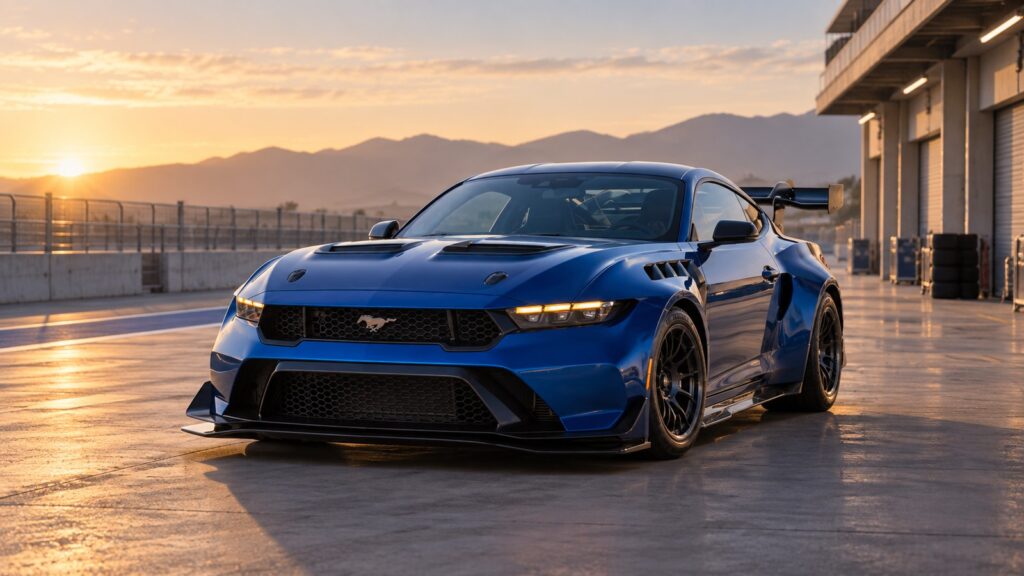
How the Mustang GTD Turns Race Hardware Into Speed

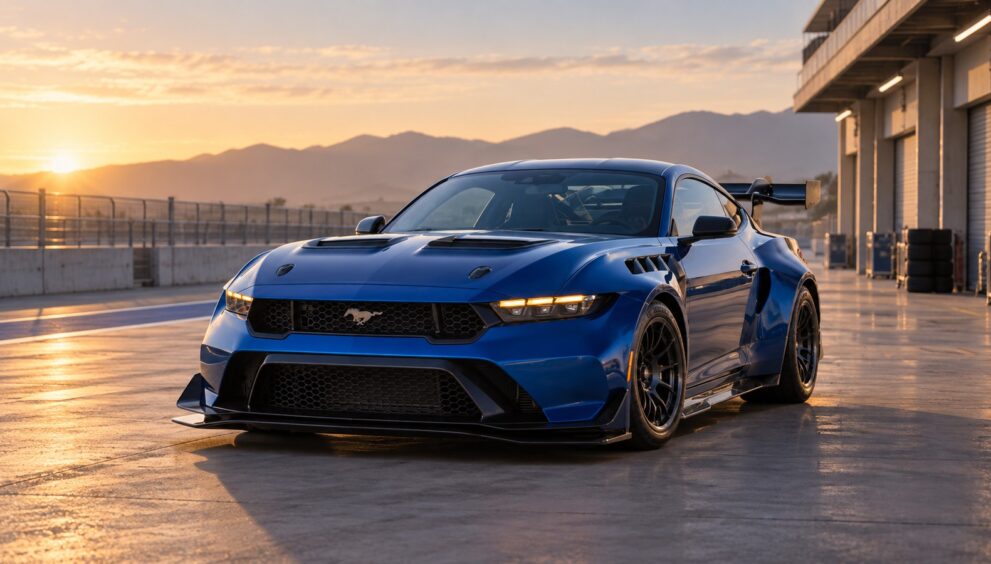
Most fast Mustangs start life as a street car and get pushed harder. The 2026 Ford Mustang GTD flips that idea on its head. It began as a GT3 racecar, and Ford kept almost all of the hardware when it built a version you can actually park in your garage.
- The GTD is built from the Mustang GT3 racecar, not the standard road car
- A 5.2-liter supercharged V-8 makes 815 horsepower and 664 pound-feet of torque
- It lapped the Nurburgring in 6:40.835 on street-legal tires
A Racecar That Got a Road License
Here is the part that makes engineers grin. The Mustang GT3 is based on the production Mustang. The GTD is based on the GT3. So Ford worked backward, taking a car built to race at Le Mans and the IMSA SportsCar Championship and figuring out how to make it legal for public roads. GTD stands for Grand Touring Daytona, the racing class where the GT3 competes.
There was no rulebook forcing Ford to build it. Current GT3 racecars are already based on production models, so a road version was never required for homologation. Ford and its partner Multimatic did it anyway, purely to see how far the Mustang name could stretch. It’s a different animal from the Shelby GT500, which is still a muscle car at heart. The GTD chases the Porsche 911 GT3 RS and Mercedes-AMG GT instead.
Suspension You Can Watch Work
The wildest engineering sits at the back. Instead of hiding the rear dampers, Ford mounted them inboard behind a glass housing so you can see the pushrod suspension move, much like a Lamborghini Aventador. Laying that hardware flat freed up room for enormous 345 mm rear tires, though it also meant giving up the rear seats. Up front, a short-long arm setup replaces the standard car’s MacPherson strut for better grip in hard corners.
Everything runs through Multimatic’s Adaptive Spool Valve dampers, which swap from softest to firmest in just 15 milliseconds. For reference, an involuntary blink takes about 150 milliseconds, so the suspension reacts ten times faster than your eyelid. A clever dual-spring design keeps things livable. In Street Mode two springs work together for a softer ride. In Track Mode a hydraulic pump compresses the soft spring out of the way, drops the ride height by 1.6 inches, and leaves only the stiff spring in play. Chris Harris said he’d rather daily-drive the GTD than a 911 GT3 RS, which tells you plenty.
Aero and a V-8 That Never Quits
GT3 racing bans active aerodynamics, so naturally Ford added them for the street version. The Performance Package brings dive planes, active underbody flaps, and a drag reduction system for the rear wing. At full tilt, Ford says the car generates close to two tons of downforce. Carbon fiber covers the aggressive wide body, which measures more than 80 inches across. There are even extra amber turn signals at the grille because the standard ones vanish at sharp angles on a car this wide.
Under the hood sits a 5.2-liter supercharged V-8 with a 2.65-liter Eaton TVS supercharger, good for 815 horsepower and 664 pound-feet of torque. Dry-sump oiling keeps it fed during hard cornering. Dyno testing showed more than 500 pound-feet on tap from roughly 2,700 rpm all the way to 7,400 rpm, so the pull never fades. Power runs through a Tremec 8-speed dual-clutch transaxle at the rear, which helped Ford reach a near 50-50 weight balance, currently 51/49. Top speed lands at 202 mph.
What the GTD Proves
The scoreboard backs up the ambition. The Mustang GTD lapped the Nurburgring in 6:40.835 on street-legal tires, and Ford showed the exact tires to silence anyone assuming slicks were involved. Shoppers comparing it against the quickest Chevy sports cars will notice it beat the Corvette ZR1X’s lap record around the same circuit. For a car wearing a Mustang badge, going toe to toe with Europe’s best-handling supercars is a genuine achievement. Ford took the thing it knows best and did the unthinkable with it, and the times on the clock say it worked.
This post may contain affiliate links. If you buy products through these links, we may receive a commission, at no additional cost to you.