

2026 Hyundai Ioniq 6 N First Drive, An Electric Sport Sedan That Actually Feels Alive

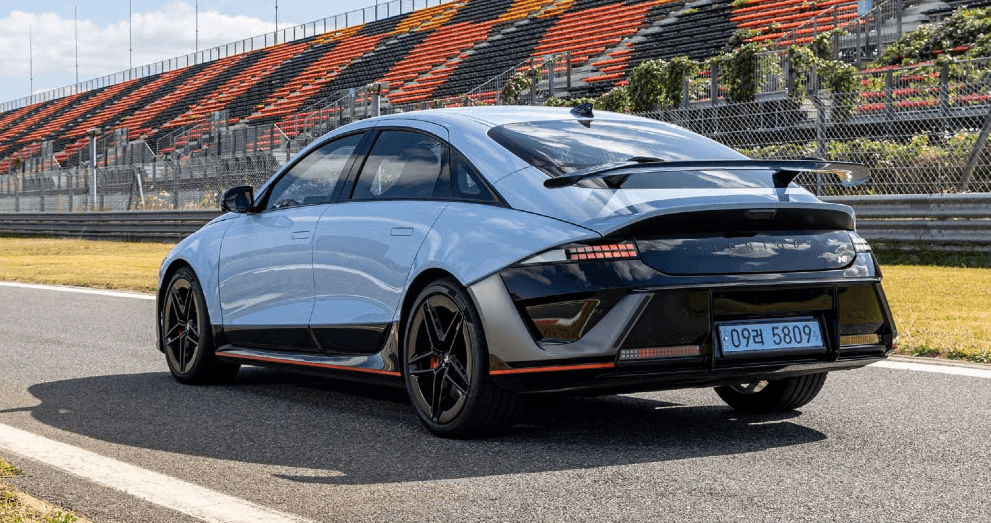
Skeptics keep insisting that electric performance cars can’t stir the soul. Hyundai’s newest N car is built to argue the opposite, with a swan-neck wing, a fake dual-clutch transmission, and enough power to embarrass plenty of gas-burning sports sedans. After a first taste on track, the 2026 Ioniq 6 N looks like the company’s most convincing case yet that EVs can be genuinely fun.
- Dual motors produce 601 hp standard and 650 hp with N Grin Boost, hitting 0-62 mph in 3.2 seconds
- Stroke-sensing dampers, an e-LSD, and a 100 kg downforce rear wing sharpen the chassis for track work
- N e-Shift and N Active Sound simulate an eight-speed dual-clutch and engine note for a more visceral feel
Powertrain and Performance Numbers
The Ioniq 6 N borrows its mechanical recipe from the Ioniq 5 N but pushes it harder. It uses an 84 kWh battery pack and a pair of electric motors making 448 kW (601 hp) and 740 Nm (546 lb-ft) of torque as standard, with 478 kW (650 hp) on tap once the N Grin Boost function is enabled and launch control is engaged. Hyundai splits that output between a 175 kW front motor and a beefier 303 kW rear motor, giving the sedan a clear rear bias when you mash the accelerator.
The numbers translate to a claimed 0-62 mph time of 3.2 seconds and a top speed of 160 mph. Charging keeps pace too. The pack supports 350-kW DC fast chargers, with peak rates around 250 kW, enough to take it from 10 to 80 percent in 18 minutes. Range takes a hit compared with the standard car, dropping to a WLTP-rated 303 miles, which will likely shrink further once the EPA gets hold of it.
Chassis Upgrades Built for the Track
Power means little without a chassis to match, and this is where the 6 N really earns its badge. Hyundai has tweaked the suspension geometry, lowering the roll center and installing new dual-layer bushings. It also uses a new stroke-sensing electronically controlled suspension that adjusts damping based on driving conditions and travel stroke.
There’s also an electronically limited-slip differential at the rear, a steering mounting void bushing to improve response, and Hyundai’s Integrated Drive Axle. The body-in-white gets 44 additional weld points and an extra 340 mm of structural adhesive, and the front brakes now use 400 mm discs with four-piston calipers. Aerodynamics get the same attention, with a rear wing that produces 100 kg (220 lbs) of downforce. Pirelli developed bespoke tires, and the forged wheels shed weight versus the cast units on lesser Ioniqs.
The result is a sedan that feels remarkably neutral. With nearly even weight distribution, it rotates predictably on turn-in and lets you balance the rear with throttle. Lean too hard on the front and it’ll push gently. Squeeze the accelerator at corner exit and the tail starts to step out in a way you can actually catch.
Driver Tech That Borders on Theatrical
What sets the Ioniq 6 N apart from every other 600-horsepower EV is the personality layered on top of the hardware. The number of driver-focused functions is dizzying. There’s the N Drift Optimizer, N Launch Control, and an N Torque Distribution that allows for 11 different adjustments to how power is sent to the wheels, ranging from 95:5 front-to-rear to 5:95 front-to-rear.
Then there’s the sound and shift trickery. Hit the right button on the steering wheel and the cabin fills with simulated engine notes, throttle blips, and pops on the overrun. The paddles behave like a real dual-clutch gearbox, complete with a soft rev limiter you can bounce off if you don’t grab the next “gear” in time. It sounds gimmicky on paper, but it changes how you drive. You start short-shifting, modulating throttle, and lifting for corners in ways no other EV asks of you. Anyone browsing a Hyundai for sale who actually cares about driving will probably find the 6 N more entertaining than half the gas-powered sport sedans on the market.
Inside the Cabin
The interior keeps the standard Ioniq 6’s strengths and adds the right amount of motorsport flavor. Hyundai has made a number of key tweaks to give the 6 N a suitably sporty feel, including a sports steering wheel with a pair of N buttons that instantly engage the more aggressive driving modes, plus sports seats and a soft knee pad built into the side of the centre console so you can brace yourself when lapping the track. A 12.3-inch touchscreen handles the deep menu of N settings, while track-themed head-up display graphics appear when you fire up the sportier modes.
What It Means for Hyundai’s N Lineup
The 6 N is the second high-performance EV from the N skunkworks, and it signals that the first one wasn’t a fluke. For context, a 2025 Ioniq 5 N costs $67,475, so expect the 6 N to potentially crest the $70,000 mark. That puts it well below a Porsche Taycan but in the same neighborhood as a BMW i4 M50, with track credentials that punch far above its price tag. For a brand that started its performance journey with the i30 N hot hatch less than a decade ago, the Ioniq 6 N is a major statement about where N is heading.
Worth the Detour
The 6 N isn’t perfect. It’s heavy, the range trails the standard Ioniq 6, and the polarizing bodywork won’t win over everyone. But on a track or a good back road, it does something almost no other EV can pull off. It rewards inputs, asks for skill, and leaves you grinning. If this is the template for Hyundai’s next wave of electric N cars, the future of fast driving looks a lot brighter than the doom-and-gloom crowd would have you believe.
This post may contain affiliate links. If you buy products through these links, we may receive a commission, at no additional cost to you.